By David Hood-Nuño and Bianca Flowers
WASHINGTON, Dec 19 (Reuters) – Federal inquiries into corporate diversity programs are underway, signaling a major shift in civil rights enforcement under President Donald Trump’s administration, the head of the Equal Employment Opportunity Commission told Reuters Thursday.
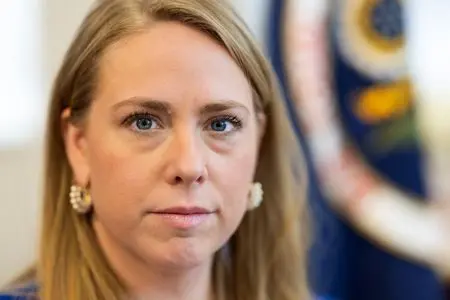
Andrea Lucas, the EEOC chair, said companies that factor race, sex or other protected characteristics into employment decisions under Title VII of the Civil Rights Act could face enforcement actions or litigation. She confirmed that inquiries are in progress and warned that initiatives tied to hiring, promotion, or marketing may come under scrutiny. Lucas declined to share which companies are facing scrutiny.
“My goal is to shift to a conservative view of civil rights,” said Lucas, the head of the Trump administration’s top anti-discrimination workforce enforcer, in a wide-ranging interview with Reuters.
Lucas’s vision for the workplace discrimination agency entails “attacking” all forms of race discrimination, including DEI; “attacking widespread” religious liberty issues like antisemitism and Covid-19 vaccine mandates; “pushing back” on gender identity and focusing on women’s sex-based rights; and “national origin discrimination,” protecting all American workers.
Lucas told Reuters that enforcement may target a host of initiatives companies have deployed to create, cater to or advertise to any race or gender-based group, including employee resource groups designed to be safe spaces where employees can speak candidly.
“If you have a DEI program or any employee program that involves taking an action in whole or in part motivated by race or sex or any other protected characteristic, that’s unlawful,” Lucas said.
Earlier this year, a group of former EEOC officials, including former Commissioner Chai R. Feldblum, published an open letter, saying under well-established legal principles, employers can lawfully take proactive steps to identify barriers that have limited opportunities for applicants and employees based on any protected characteristic. “Properly constructed, such efforts are not discriminatory,” they said.
A NEW DIRECTION
The hard pivot represents a new direction for the independent agency to echo policies championed by conservatives and the administration. The EEOC was created out of the landmark 1964 Civil Rights Act to enforce federal laws prohibiting workplace discrimination based on race, color, religion, sex or national origin, in companies’ hiring, retention or promotion practices.
Lucas also said the White House’s position is that white men have been discriminated against in the workplace by DEI programs, encouraging submission of complaints.
“Chair Lucas and the Trump Administration are ensuring all Americans are treated fairly by rigorously enforcing civil rights laws, ending illegal DEI-motivated race and sex discrimination, and upholding the Constitution,” White House spokesperson Liz Huston said in a statement to Reuters.
In contrast, three former EEOC officials told Reuters the agency would have to prove a pattern or practice of discrimination in order to go after companies and demonstrate that the employer is not in compliance with Title VII of the Civil Rights Act, a high bar to prove in a court of law.
The transformation of the EEOC is likely to face significant pushback from experts, as civil rights advocates and Democrats have long said DEI policies are necessary to address longstanding structural inequities and discrimination.
But the redirection means no company is safe from enforcement actions, subpoenas or litigation now that Lucas is chair after Trump designated her as chair in early November, giving the agency a 2-1 Republican majority, with two vacancies. There can only be three of one party on the commission. Last month, the Senate confirmed Republican Brittany Panuccio, while Commissioner Kalpana Kotagal is the lone Democrat.
The EEOC’s inquiries will intensify in 2026 with all the tools the agency plans to employ, including expanded web-archive searches to target companies that have only changed how they’ve talked about DEI.
Her focus is on “race-restricted programs or sex-restricted programs or other actions that involve overt distinctions between people based on race,” she said. “It doesn’t matter if you call that DEI or belonging or ‘EO’ or anything: If it functions like that, it’s illegal.”
Lucas’s new direction follows Trump’s flurry of executive orders earlier this year, including two that targeted DEI initiatives, such as mandatory racial equity trainings for staff.
The move prompted several Fortune 500 companies — including Target, Walmart and Amazon, all of which employ large numbers of workers from historically marginalized groups — to scrap or reassess such initiatives altogether.
In response, some companies quietly stripped DEI language from policy documents and recruitment messaging, while others went further, dissolving employee resource groups and ending longstanding efforts to diversify their supplier networks.
It’s an open question Lucas said her agency will answer in the new year: whether those initiatives meet the threshold to take broad, swift action, she said.
“We’re talking about potentially thousands of people being involved or like a very blatant racial or sex-discrimination-related restricted programming,” Lucas said. “Either way, we’re looking for strategic impact.”
(Reporting by David Hood-Nuño and Bianca Flowers; Editing by Kat Stafford)
Brought to you by www.srnnews.com