By Blake Brittain
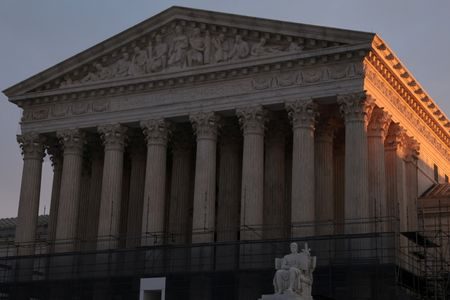
WASHINGTON, Jan 16 (Reuters) – The U.S. Supreme Court agreed on Friday to hear a patent dispute involving Amarin Pharma’s cardiovascular drug Vascepa that could have broad consequences for generic drug makers and so-called “skinny labels” for their products that remove specific, patented uses of a brand-name medication.
The justices took up British generic drug maker Hikma’s appeal of a lower court’s decision that let Irish-American biopharmaceutical company Amarin proceed with a lawsuit accusing Hikma of encouraging doctors to prescribe its generic version of Vascepa in ways that violated Amarin’s patent rights.
The dispute involves a high-profile issue in pharmaceutical patent law.
Vascepa, derived from fish oil, has been approved by the U.S. Food and Drug Administration to lower so-called “bad” cholesterol and reduce the risk of cardiovascular disease. It is currently Amarin’s only product.
Vascepa earned Amarin $228.6 million in 2024. The FDA in 2012 approved the drug to treat severe hypertriglyceridemia, a condition involving an excess of fats in the blood, before approving it for other uses in 2019.
“Skinny labels,” which are meant to encourage generic competition, allow generic drugmakers to avoid patent lawsuits if the label of their generic omits infringing uses of the brand-name drug it replicates. The FDA approved Hikma’s Vascepa generic solely to treat hypertriglyceridemia, and required it to include a skinny label that omitted the drug’s other uses.
Amarin sued Hikma in Delaware federal court in 2020, arguing Hikma’s label combined with statements in press releases and on its website encouraged doctors to prescribe the generic in infringing ways. U.S. District Judge Richard Andrews dismissed the case in 2022, but the U.S. Court of Appeals for the Federal Circuit revived it in 2024.
The Federal Circuit said Hikma publicly referred to its drug as “generic Vascepa” without clarifying that it was approved only for a specific use, which could have encouraged doctors to prescribe it for infringing uses.
Hikma has asked the Supreme Court to hear its appeal of that decision, arguing that the Federal Circuit’s ruling endangered skinny labels and created an “imminent threat to generic competition.”
“As a practical matter, any branded pharmaceutical company can now point to some public statement by the generic-drug manufacturer to justify a post-launch suit alleging induced infringement, even when the generic product is labeled only for unpatented uses,” Hikma said.
President Donald Trump’s administration supported Hikma’s Supreme Court appeal, and said the Federal Circuit ruling “subverts Congress’s balance between competing interests.”
The Supreme Court turned down an opportunity to consider another “skinny label” case in 2023, rejecting a request from generic drug maker Teva Pharmaceuticals. Former President Joe Biden’s administration had encouraged the Supreme Court to weigh in on that case.
(Reporting by Blake Brittain in Washington; Editing by Will Dunham)
Brought to you by www.srnnews.com