Iran’s government is still in power. Hezbollah and Hamas haven’t been defeated. U.S. President Donald Trump’s interests may be diverging from Israel’s.
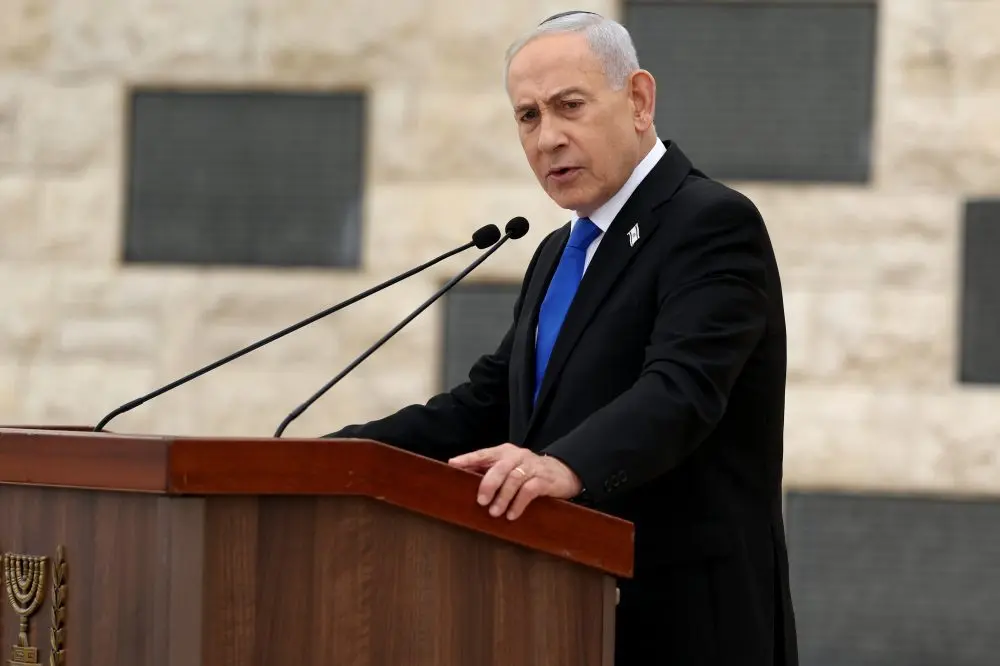
Wars with Iran and its proxies haven’t gone according to plan for Prime Minister Benjamin Netanyahu, and that could mean trouble for Israel’s longest-serving prime minister in elections scheduled for later this year. Many Israelis are dissatisfied with the Netanyahu government’s wartime leadership, according to a recent poll.
At the start of the U.S.-Israeli campaign against Iran in late February, Netanyahu said the goal was to degrade the Islamic Republic’s military, eradicate its nuclear and ballistic missile programs and create the conditions for its overthrow. While Iran’s military has been badly damaged, it is still a threat to neighbors and ships in the Strait of Hormuz — and Netanyahu’s other goals remained unfulfilled when a ceasefire was announced earlier this month.
Israel’s latest war with Hezbollah in Lebanon has also been cut short. Netanyahu said he agreed to a truce at the request of Trump but that Israel was “not finished yet” with the Iran-backed militant group; Israeli forces are still occupying a 10-kilometer- (6-mile-) deep swath of southern Lebanon.
The recent poll showing Israelis’ dissatisfaction comes on top of the unresolved war in Gaza – another instance in which Trump pressured Netanyahu to wind down military operations. More than two years after Hamas’ October 2023 attack on Israel that triggered the war, the Iran-backed militant group is weakened but still standing.
“After 925 days of fighting since October 7, Israel has failed to achieve decisive victory on any front,” wrote Yoav Limor, a prominent military affairs commentator. “At the end of yet another war, it is perceived as a country whose decisions are not made in Jerusalem, but in Washington.”
For his part, Netanyahu has cast the war with Iran as a success, a preemptive strike against an “existential” threat. “We crushed the Iranian regime’s destruction machine in advance,” he recently said.
Trust in Netanyahu’s government nose-dived after the deadly 2023 Hamas attack. He spent the next two years waging a fierce retaliatory campaign against Hamas and its allies and secured the release of dozens of hostages from Gaza as part of a ceasefire deal.
Israel has also enjoyed a number of military successes against Iran and its Lebanese proxy, the Hezbollah militant group. But these gains do not appear to have benefited Netanyahu personally. While the latest wars against Iran and Hezbollah were widely supported, the inconclusive outcomes have left many Israelis feeling fatigued and disappointed.
“People were disappointed because it hadn’t achieved the goals,” said Dahlia Scheindlin, a political analyst in Tel Aviv.
A poll by the Israel Democracy Institute, a centrist think tank in Jerusalem, during the first week of the war against Iran found a solid majority of respondents, 64%, trusted Netanyahu to direct the campaign. But a second poll in the days after the April 8 ceasefire found that Israelis rated the management of the war by the government — not just Netanyahu — more negatively than positively.
The poll, which was conducted before the U.S. brokered and extended the ceasefire in Lebanon, also found that a majority of Israelis thought the fighting in Lebanon against Hezbollah should continue.
Since the ceasefires with Iran and Hezbollah, Israelis have begun to question whether the relationship between Netanyahu and Trump — and Israel and the United States — is as strong as it was before the wars began.
Though Trump’s interests have at times diverged from those of Netanyahu, the U.S. president has continued to publicly laud Israel. He wrote on Truth Social recently that “whether people like Israel or not, they have proven to be a GREAT Ally of the United States of America.”
He said Thursday that he’d host Netanyahu and Lebanese President Joseph Aoun at the White House in the “near future” for talks on the truce, describing it as an honor.
Israelis have their doubts.
In the Israel Democracy Institute’s poll, most Israelis said there was a “fairly” or “very” low likelihood that the agreement reached between the U.S. and Iran would take Israel’s security into account to an appropriate degree.
Asked about the leaders’ relationship, Netanyahu’s office declined to comment. But an Israeli official who spoke on condition of anonymity to describe private conversations said Trump and Netanyahu still speak every day.
Late last year, Netanyahu announced he would award the Israel Prize, one of the country’s highest honors, to Trump, making him the first foreign leader to receive it. Israel invited Trump to formally accept the award in Jerusalem on April 22, as part of the country’s 78th celebration of its independence.
The day came and went without a Trump visit.
The ceasefire with Lebanon has stoked deep disappointment in Israeli towns near the border that have endured a month and a half of missile fire from Hezbollah.
“I live 100 meters from the border,” said Asaf Oakil, a resident of Kiryat Shmona. “The ceasefire? It’s a mistake.”
Shops are still closed and protests have broken out in recent days, with much of the anger directed at Netanyahu.
“I really hope that the residents of the north will learn from this and vote for someone who can help us here, not someone who brings us down and buries us,” said Shosh Tsaoula, another resident of Kiryat Shmona.
Netanyahu’s government is in the final months of its four-year term and is required to hold elections by the end of October.
Two opposition politicians — Naftali Bennett and Yair Lapid — announced Sunday that they would join forces in the next election. Another popular opposition figure, former military chief Gadi Eisenkot, is also expected to team up with the two men.
Nadav Eyal, a commentator with the Israeli Yediot Ahronoth daily newspaper, said that Netanyahu is in “big trouble” if he cannot convince Israelis that the wars with Iran, Hezbollah and Hamas have led to lasting security gains.
“With unstable ceasefires that can lapse at any given point, voters will be not happy about it.”
___
AP reporters Ibrahim Hazboun and Sam Metz in Jerusalem contributed reporting.
Brought to you by www.srnnews.com