By Nathan Layne
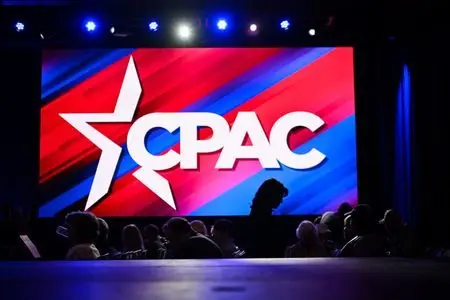
GRAPEVINE, Texas, March 28 (Reuters) – When former Congressman Matt Gaetz opened his speech by aligning with a Republican faction “loyal to only one nation,” his message to the Conservative Political Action Conference was clear: It was a veiled swipe at perceived Israeli influence over U.S. politicians, even without naming Israel outright.
A month into the U.S.-Israeli war with Iran, Gaetz’s comments struck a discordant note at the annual CPAC event. They cut against calls for unity and exposed a growing Republican rift largely along generational lines, as younger conservatives increasingly question support for Israel.
That skepticism reflects a broader distrust of military intervention among younger Republicans, fueled in part by conservative figures such as Tucker Carlson, whose allegations of excessive Israeli influence on U.S. policy have drawn accusations that he is stoking antisemitism. Carlson has repeatedly denied accusations of antisemitism.
The Iran war, including Israel’s role in it, emerged as one of the main flashpoints at CPAC, which for decades has served as a central gathering for Republican politicians and activists.
Jack Posobiec, a conservative commentator and online influencer, said age 45 is a dividing line, with the younger cohort more likely to question the party’s steadfast support of Israel.
“People want to paint it off as if it’s antisemitism, but I don’t think that’s what it is,” Posobiec told Reuters. “It’s just a question of: Why? What is the purpose of this relationship? And I hear that a lot from young voters.”
The issue has roiled the Democratic Party in recent weeks, with some lawmakers and primary candidates distancing themselves from the pro-Israel lobbying group AIPAC amid growing unease over Israel’s military actions.
It is now exposing fault lines among Republicans as well, turning off young voters who helped propel Trump to victory in 2024 and potentially complicating the party’s efforts to defend slim majorities in the Senate and House of Representatives heading into November’s midterm elections.
Noah Bundy, 17, and Ryder Gerrald, 18, conservative friends from Georgia attending their first CPAC, said they opposed the war with Iran and questioned whether the military operation put Israel’s interests ahead of America’s.
“I think they totally pushed us into a war with Iran,” Bundy said. “My whole family is military and none of us is really for it.”
“Our younger generation, we don’t like Israel as much compared to the older generation,” said Gerrald. He said he would prefer redirecting U.S. taxpayer dollars toward domestic priorities, rather than spending to bolster Israel’s military.
EVANGELICAL SUPPORT FOR ISRAEL
The party’s pro-Israel stance, however, resonates strongly with evangelicals – a pillar of Trump’s political base – and with older voters like Harry Strine III, an 83-year-old CPAC attendee who was wearing a red “Make America Great Again” hat.
“Israel is God’s people,” Strine said. “The U.S. was founded on the Judeo-Christian belief. I guess I’m a traditionalist.”
On the conference’s opening day, Rev. Franklin Graham said that, by striking Iran to protect Israel, President Donald Trump was like the biblical figure of Esther, a Jewish queen who, according to scripture, was elevated by God to save her people from annihilation in ancient Persia.
“I believe God has raised him up for a time such as this, like Queen Esther,” said Graham, a prominent Christian evangelist, invoking a core evangelical belief that the modern state of Israel represents the fulfillment of biblical prophecy.
But unease over the Iran war and rising gasoline prices has pushed Trump’s approval rating down to 36% – its lowest since his return to the White House – a Reuters/Ipsos poll completed on Monday found. Support among his core base remains strong, however, with 74% of Republicans backing the strikes on Iran.
The debate over Israel coincides with a broader Republican fight over the future of the MAGA movement and who belongs in it. Allegations of antisemitism flared at a December event organized by Turning Point USA, a nonprofit focused on promoting conservative politics. At its first national event since founder Charlie Kirk’s death, commentator Ben Shapiro criticized fellow conservatives for associating with figures like white nationalist streamer Nick Fuentes, who has praised Hitler.
In his CPAC speech on Thursday, Gaetz said he did not agree with Shapiro and other conservative commentators “that we have some sort of near slavish loyalty to a country in a faraway land,” an apparent reference to Israel.
He argued that conservatives needed to allow for disagreements and that “antisemitism isn’t hiding around every corner and in every bush.”
Visitors to the CPAC booth of Generation Zion, a nonprofit group that trains young Christians and Jews to advocate for Israel and to combat antisemitism, could pick up a sticker reading “Tucker Carlson Hates Me,” a rebuke of the commentator’s recent criticism of Christian Zionism and Israel’s alleged sway over U.S. politics.
Gabriel Khuly, a 19-year-old volunteer for the group, said that while the Republican Party has an antisemitism problem, it is driven by a small minority with an outsized voice online.
“The actual anti-Israel, antisemitic wing of the Republican Party, I think, makes itself seem a lot bigger than it really is.”
(reporting by Nathan Layne in Grapevine, Texas; Additional reporting by Tim Reid and Jason Lange in Washington; Editing by Michael Learmonth and Edmund Klamann)
Brought to you by www.srnnews.com