PORTLAND, Ore. (AP) — A federal judge in Oregon dismissed a Justice Department lawsuit seeking Oregon’s unredacted voter rolls on Monday in another setback to wide-ranging efforts by President Donald Trump’s administration to get detailed voter data from states.
In a hearing, U.S. District Judge Mustafa Kasubhai said he would dismiss the suit and issue a final written opinion in the coming days. The updated docket for the case showed that Oregon’s move to dismiss the case was granted.
Oregon Attorney General Dan Rayfield welcomed the move.
“The court dismissed this case because the federal government never met the legal standard to get these records in the first place,” he said in an emailed statement. “Oregonians deserve to know that voting laws can’t be used as a backdoor to grab their personal information.”
The Justice Department declined to comment.
Kasubhai scheduled the hearing after U.S. Attorney General Pam Bondi sent a letter to Minnesota Gov. Tim Walz dated Saturday, the same day federal immigration agents fatally shot 37-year-old ICU nurse Alex Pretti in Minneapolis, which has seen widespread protests over increased immigration enforcement and the previous killing of Renee Good by an immigration officer.
In her letter, Bondi asked the Democratic governor to support immigration officers and shared three “simple steps” to “help bring back law and order” — including by giving the Justice Department the ability to “access voter rolls to confirm that Minnesota’s voter registration practices comply with federal law.”
Bondi also asked for the state’s records of its Medicaid and food assistance programs, and for the repeal of sanctuary policies that limit local officials from cooperating with federal immigration authorities.
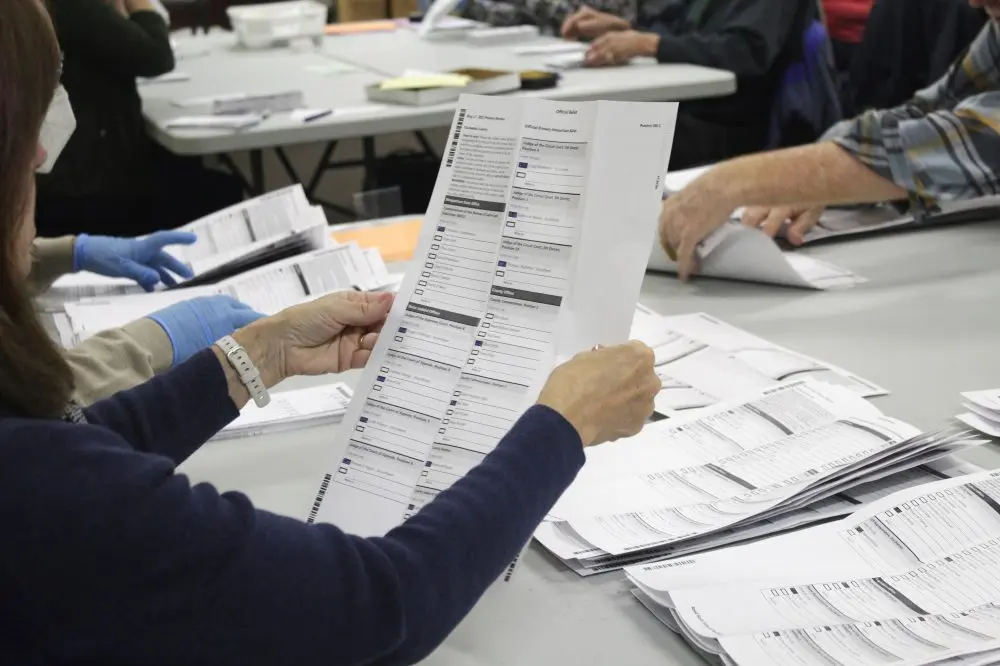
The Justice Department has been seeking detailed voter data that includes names, dates of birth, residential addresses, driver’s license numbers and partial Social Security numbers. Officials in many states have said turning over such information would violate both state and federal privacy laws.
The Justice Department has filed lawsuits against at least 23 states and the District of Columbia as part of its effort to collect such data. Last week a federal judge in Georgia dismissed such a suit after ruling the federal government had sued in the wrong city, and earlier this month a federal judge in California dismissed a suit there after finding the government’s request was “unprecedented and illegal.”
The department has said it needs to access detailed voter data to ensure election officials are following federal election laws. Election officials have disputed that and raised concerns that federal officials are trying to use the sensitive data for other purposes, such as searching for potential noncitizens on the rolls.
In a July letter, the department asked Oregon for an electronic copy of its statewide registration list and details on the steps it has taken to remove ineligible voters, court filings show. It sent another letter in August saying it needed the voter list to assess compliance with federal law, and that the list must include information such as full names, birth dates, driver’s license numbers or partial Social Security numbers.
Oregon officials responded in August that the department lacked the authority to request the list and offered to provide the publicly available list, court filings show. The department argued it has the authority to request the data under multiple federal laws and is complying with privacy laws.
Kasubhai called for the Monday hearing in Oregon’s lawsuit so that attorneys on both sides could provide additional arguments on how Bondi’s letter was relevant in interpreting the “basis and purpose” of the department’s request for voter data.
The department argued it had authority under the Civil Rights Act of 1960 to request voter records, as the law says such records are to be made available to the U.S. Attorney General upon a demand in writing that states the basis and purpose of the request. Yet Kasubhai said the department’s August letter did not satisfy the law’s requirement for stating a basis and purpose when requesting voter records. He added that he read the congressional record of the time when the law was passed, and found it was “unequivocal” on the release of records being associated with investigations involving discrimination in elections.
The Justice Department’s outreach has raised alarm among some election officials because the agency doesn’t have the constitutional authority to run elections. That power is granted to states and Congress. Federal law also protects the sharing of individual data with the federal government.
Brought to you by www.srnnews.com