
By David Shepardson
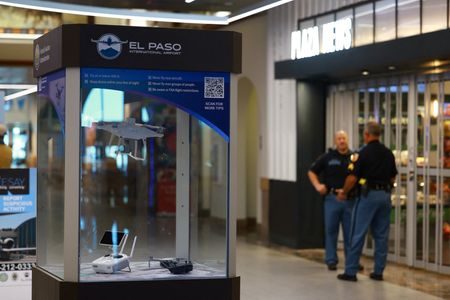
WASHINGTON, Feb 11 (Reuters) – The Federal Aviation Administration’s decision to briefly close El Paso airport to all traffic was prompted by safety concerns over testing of a new laser-based counter-drone technology at the nearby U.S. Army Fort Bliss, sources told Reuters.
It was not the first time the issue has impacted flights.
In March, testing of counter-drone technology near Reagan Washington National Airport by the U.S. Secret Service and Navy led to numerous flight crews receiving faulty alerts of potentially nearby aircraft, the FAA and U.S. Senator Ted Cruz said.
Cruz, who chairs the Senate Commerce Committee, disclosed at a hearing last year that faulty alerts that caused some flights to abort landings were due to the government testing using the same spectrum band as the alerting system. That led to interference that impacted at least a dozen flights.
Cruz, a Republican from Texas, called the testing inappropriate and “deeply disturbing” after a January 2025 fatal collision of an American Airlines regional jet and an Army helicopter killed 67 people.
“The FAA had previously warned the Navy and the Secret Service against using that specific spectrum band due to interference risks,” Cruz said.
A Secret Service spokesperson denied the agency had conducted any drone system testing and added it “has been coordinating with the FAA to ensure our systems do not interfere with FAA frequencies or commercial air traffic operations.”
The FAA said some crews aborted landings and executed go-arounds as a result of the alerts that aim to prevent collisions.
New York magazine reported last year the issue was tied to testing of equipment at the Naval Observatory, the vice president’s official residence. A source told Reuters that the FAA had spent days attempting to determine the source of interference.
“We were able to pinpoint the source and correct it and there were no further issues,” the FAA told Reuters last year.
Airplanes and pilots use Traffic Alert and Collision Avoidance Systems to warn of potential collisions, which function independently of ground-based air traffic control.
(Reporting by David Shepardson; Editing by Chizu Nomiyama )
Brought to you by www.srnnews.com