A weekslong “snow drought” in Northern California’s Sierra Nevada helped set the stage for Tuesday’s deadly avalanche, after several feet of new snow fell on an earlier layer that had hardened, making it unstable and easily triggered, experts said.
The new snow did not have time to bond to the earlier layer before the avalanche near Lake Tahoe killed at least eight backcountry skiers, said Craig Clements, a meteorology professor at San Jose State University, who has conducted avalanche research. Six skiers survived and rescuers were still searching for another one who was still missing on Wednesday.
The group was on a three-day backcountry trek in the Sierra Nevada on Tuesday morning when they were trapped by the avalanche as a winter storm pummeled the West Coast.
The dangers generally are highest in the first 24 to 48 hours after a very large snowfall, Clements said, and authorities had issued avalanche warnings.
Here’s what to know.
When weather is dry and clear, as it had been in the Sierra Nevada since January, snow crystals change and can become angular or round over time, Clements said.
If heavy new snow falls on the crystals, the layers often can’t bond and the new snow forms what is called a storm slab over a weaker layer.
“Because it’s on a mountain, it will slide,” when it’s triggered by any change in the tension above or below, sometimes naturally but also because of people traversing the area, Clements said.
Authorities have not said what triggered Tuesday’s avalanche.
If there had been more consistent snowfall throughout the winter, different layers could have bonded more easily, Clements said. But even when a snow slab forms, the danger often only lasts a couple of days until the new snow stabilizes, he said.
Although climate change can lead to weather extremes that include both drought and heavier precipitation, it’s difficult to say how and whether it will affect avalanches or where they occur, scientists say.
Clements said this week’s avalanche is fairly typical for California’s Sierra Nevada and he doesn’t believe it can be linked to climate change.
Avalanches are a mechanism of how much snow falls on weak or stable layers, and this one was “a meteorological phenomenon, not a climate phenomenon,” he said.
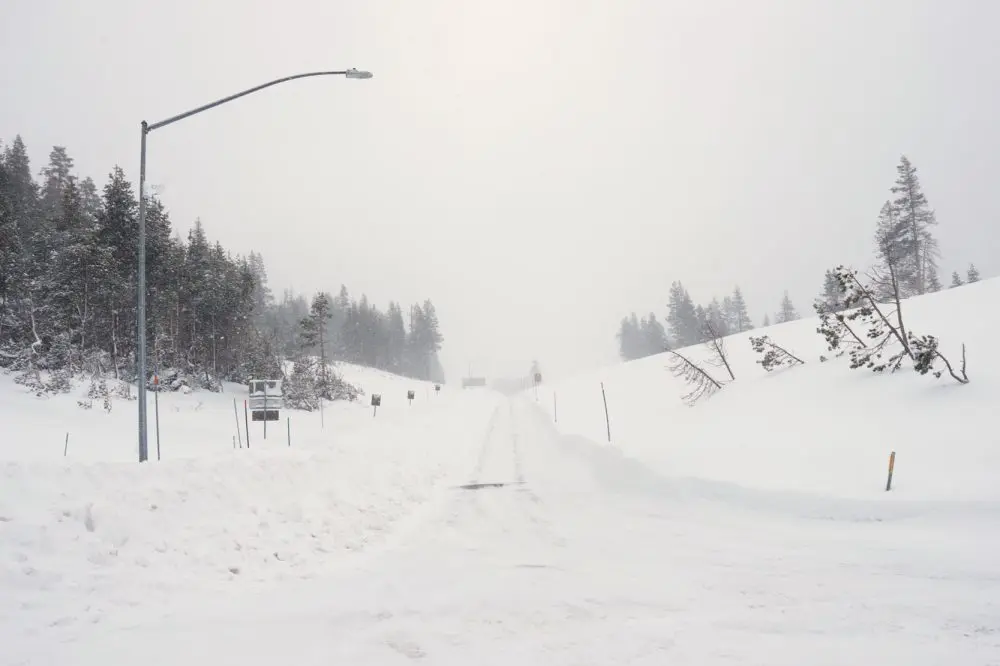
About 3 feet to 6 feet of snow has fallen since Sunday, when the group started its trip. The area was also hit by subfreezing temperatures and gale force winds. The Sierra Avalanche Center said the threat of more avalanches remained Wednesday and left the snowpack unstable and unpredictable.
Crews found the bodies of eight backcountry skiers near California’s Lake Tahoe and were searching for one more following Tuesday’s avalanche, which authorities say was the nation’s deadliest in nearly half a century.
Six from the guided tour were rescued six hours after the avalanche.
Nevada County Sheriff Shannan Moon said Wednesday that investigators would look into the decision to proceed with the trip despite the storm forecast.
The skiers traveled Sunday to remote huts at 7,600 feet (3,415 meters) in Tahoe National Forest, carrying their own food and supplies. At 6:49 that morning, the Sierra Avalanche Center issued an avalanche watch for the area, indicating that large slides were likely in the next 24 to 48 hours.
___
The Associated Press’ climate and environmental coverage receives financial support from multiple private foundations. AP is solely responsible for all content. Find AP’s standards for working with philanthropies, a list of supporters and funded coverage areas at AP.org.
Brought to you by www.srnnews.com