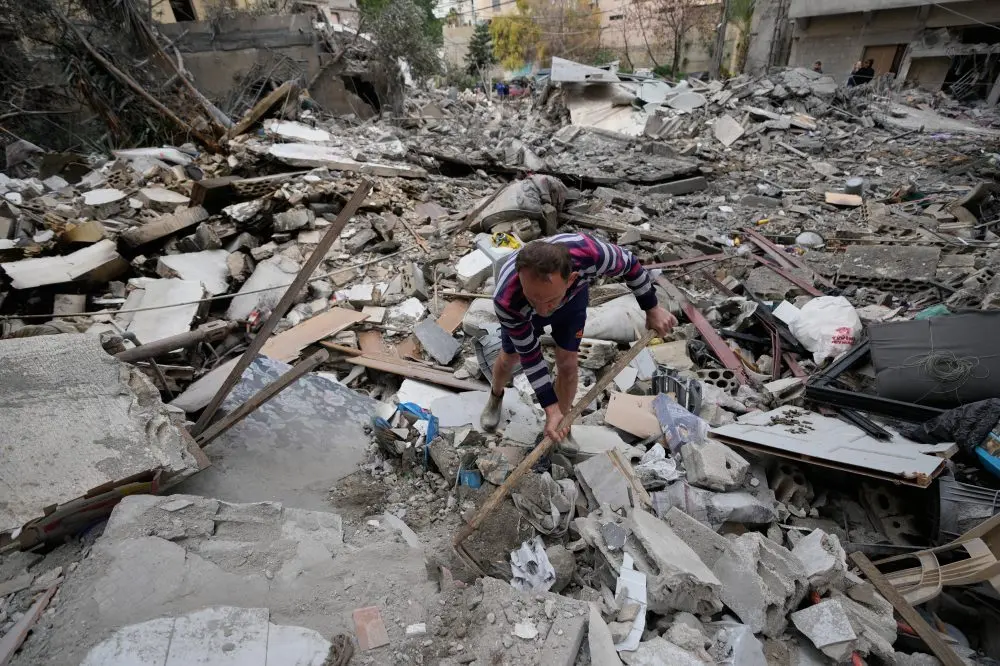
Israel’s military said early Friday it had conducted a wave of strikes “in the heart of Tehran” while smoke was seen billowing in the Beirut skyline after U.S. President Donald Trump delayed his threat to obliterate Iran’s energy plants over its effective closure of the Strait of Hormuz.
Israel has moved thousands of troops across the border into Lebanon, where Israeli officials said they want to take control of the entire area south of the Litani River — some 20 miles (about 30 kilometers) north of the border.
Facing a convulsing stock market, Trump on Thursday extended a deadline for reopening the Strait of Hormuz until April 6, saying Iran asked for the grace period and that talks were going “very well,” despite the fact Iran continues to publicly insist it is not negotiating with the White House on a 15-point proposal to end the conflict
The war has killed more than 1,900 people in Iran and nearly 1,100 in Lebanon. Eighteen people have died in Israel, while three Israeli soldiers have also been killed in Lebanon. Thirteen U.S. military members have died, as well as a number of civilians on land and sea in the Gulf region. Millions of people in Lebanon and Iran have been displaced.
Here is the latest:
Finance Minister Nicola Willis outlined Friday a four-tier plan for future fuel shortages, which at its most severe levels includes limits on buying gasoline and its prioritization for life-preserving services.
Willis disclosed criteria, including export restrictions and the state of domestic fuel stocks, that would guide movement between the four levels.
Willis said that the current designation was phase one, the lowest level, but that it was important for New Zealanders to know the possible extent of future restrictions.
There are no restrictions currently enacted on gasoline use or purchasing in New Zealand.
Brought to you by www.srnnews.com