By David Hood-Nuño
WASHINGTON, Jan 27 (Reuters) – Nearly three months pregnant, Kennisha just needed to sit down.
As assistant manager at a Sonic fast-food outlet on the outskirts of Dayton, Ohio, she sat on the only chair available to employees to ease her nausea, according to a complaint filed on Monday with the Equal Employment Opportunity Commission under the Pregnant Workers Fairness Act.
Sonic allegedly denied her request around Thanksgiving to occasionally sit on the one chair other employees used for smoke breaks. She quit and started work elsewhere, with a few months left in her pregnancy.
“It does feel good to have a new job, but it’s still in the back of my mind now,” said Kennisha, who asked to be identified by her first name only due to fear of retaliation.
Inspire Brands, Sonic’s parent company, did not provide a comment.
COMMISSION CHAIR MAY NARROW RULE
The 2022 law requires employers to reasonably accommodate pregnant workers under EEOC regulations. But those rules may dramatically change under Republican EEOC Chair Andrea Lucas, who said in 2024 the regulations were written too broadly.
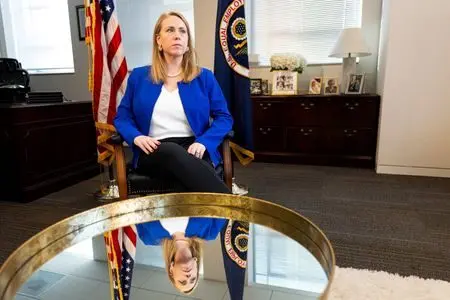
Now, as chair since November and with a Republican majority on the commission, she has already begun a top-down makeover of the agency to reflect “a conservative view of civil rights,” she told Reuters exclusively in December.
The final rules were written broadly to include as many scenarios as possible, experts and lawyers say. Any narrowing of the rules may expose pregnant workers to discrimination or deny them financial remedies in court, they said.
Lucas said in 2024 the rules erroneously included anything that “relates to any aspect of the female reproductive system,” which likely refers to abortions and in vitro fertilization, experts said. Those protections are almost certainly on the chopping block, but pregnancy accommodation is an open question, they said.
Employers should “creatively and proactively” accommodate pregnant workers, she said in a 16-page dissent when the agency approved the rules.
“Protecting pregnant women and working families is a central pillar of the Trump Administration’s common-sense civil rights agenda,” Lucas said in a statement to Reuters. “Under my leadership, since January 2025, the agency has nearly doubled its lawsuits addressing pregnancy and postpartum discrimination and accommodation compared to all of 2024.”
The agency has not yet issued its 2026 regulatory agenda, a list of priorities agencies publish annually, but workplace lawyers expect changes soon. In January, the agency pared other policies in line with Lucas’ conservative vision.
About 2,700 pregnancy-related complaints were filed with the agency in fiscal year 2024, according to the most-recent data available.
Even if a case merits review under stricter rules, cases like Kennisha’s could be overlooked because of Lucas’ priorities to shift the EEOC’s focus toward issues long-championed by conservatives, such as claims of discrimination against white men, said Inimai Chettiar, president of legal and advocacy group A Better Balance, which represents Kennisha.
“We do have some concerns on how rigorously the EEOC is going to be investigating these types of violations,” said Chettiar.
PREGNANCY ACCOMMODATIONS
The rules cover a range of pregnancy-related physical and mental conditions. Employers can deny requests if they can show the accommodations would cause significant difficulty or expense.
“Efforts to weaken the PWFA’s meaningful worker protections, which have been shown to reduce miscarriage rates by nearly 10 percent, are misguided,” said Democratic EEOC Commissioner Kalpana Kotagal, in a statement to Reuters. “We should be standing up for women and families, not weakening their civil rights.”
After doctors for Willamina Barclay, now 38, classified her March 2025 pregnancy as “high-risk” following a miscarriage, supervisors at her Amazon warehouse in Rochester, New York, denied her requests to work lower-stress tasks, she said in an interview and in an EEOC complaint.
In June, Barclay said she experienced severe abdominal pain after lifting heavy objects. Eventually, she was allegedly wheeled away in a wheelchair in front of Amazon human resources staff and supervisors to a hospital.
Amazon ultimately fired Barclay because she overused unpaid time off in violation of internal policies.
“We strive to provide a safe and supportive environment for everyone,” said Amazon spokesperson Kelly Nantel in a statement. “We’ll keep listening to our teams and investigating any concerns they raise, and if we find that we got something wrong, we work hard to make it right.”
Although the EEOC marked her case as possible for mediation, her lawyer said Barclay has to wait. Amazon is still deciding whether to meet and the agency may be considering an investigation and potential litigation in court — while also narrowing rules that could hurt her case.
But Barclay cannot wait: She is unemployed with a newborn baby boy.
“When you get fired, your bills don’t stop, your kids don’t stop, your babies don’t stop, your family at home don’t stop,” she said in an interview.
(Reporting by David Hood-Nuño; Editing by Kat Stafford and Rod Nickel)
Brought to you by www.srnnews.com